

*Note: All racing posts will eventually be moved from JTLWrites and on to their own separate page.
All three NASCAR series wrapped up their seasons this weekend at Phoenix. The last laps were run, the final points were scored, and the series champions were crowned. Most importantly, this was the final time we will see the current championship format, where the champion is decided in a single race. I have some thoughts about the weekend and what NASCAR should do with the format moving forward.
Truck Series: The Happiest Moment of the Weekend
Corey Heim finished his historic season by absolutely dominating the race, leading 100 of the 161 laps run while also sweeping stages one and two. A late-race caution put Heim’s championship hopes in jeopardy until he made the move of the weekend, diving low through turn one and putting the front of the field into a seven-wide scenario. He exited the corner in second, right next to championship contender Ty Majeski.
However, a four-truck crash caused a second overtime restart, where Heim was able to drive away from Majeski and take the win and championship.
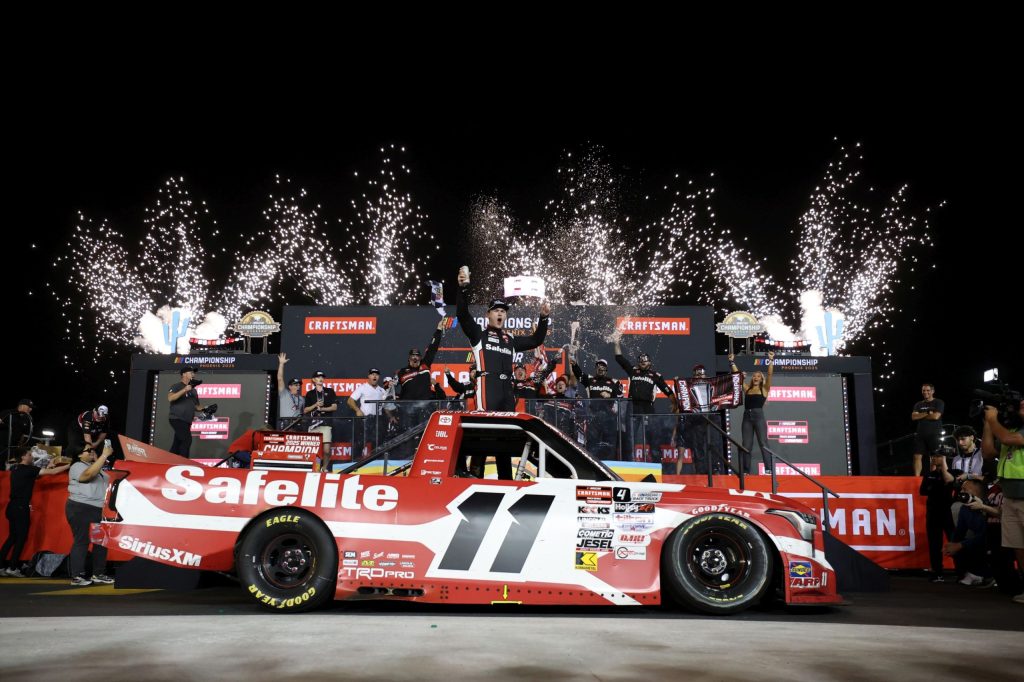
NASCAR needed this finish in hindsight. Heim was the dominant truck all year long, with 12 wins, 7 poles, and 19 top 5s on the season. His 12 wins are a Truck Series record, and he did not have a single DNF all season.
If I’m honest, anyone else winning the championship would have felt wrong for such a dominant season. If the final restarts had gone any other way and prevented him from securing the title, social media would have had a full meltdown.
Instead, Heim won his title. While everyone was happy with this, there were still discussions and debates about the championship format. This would be a common trend throughout the weekend.
Xfinity: Dominance Unrewarded
The Xfinity Series championship carried a little bit of a bittersweet aura. This was the final race with Xfinity as the series’ premier sponsor. For this, Xfinity and the CW ran the entire final stage with no commercials, which many fans appreciated and enjoyed.
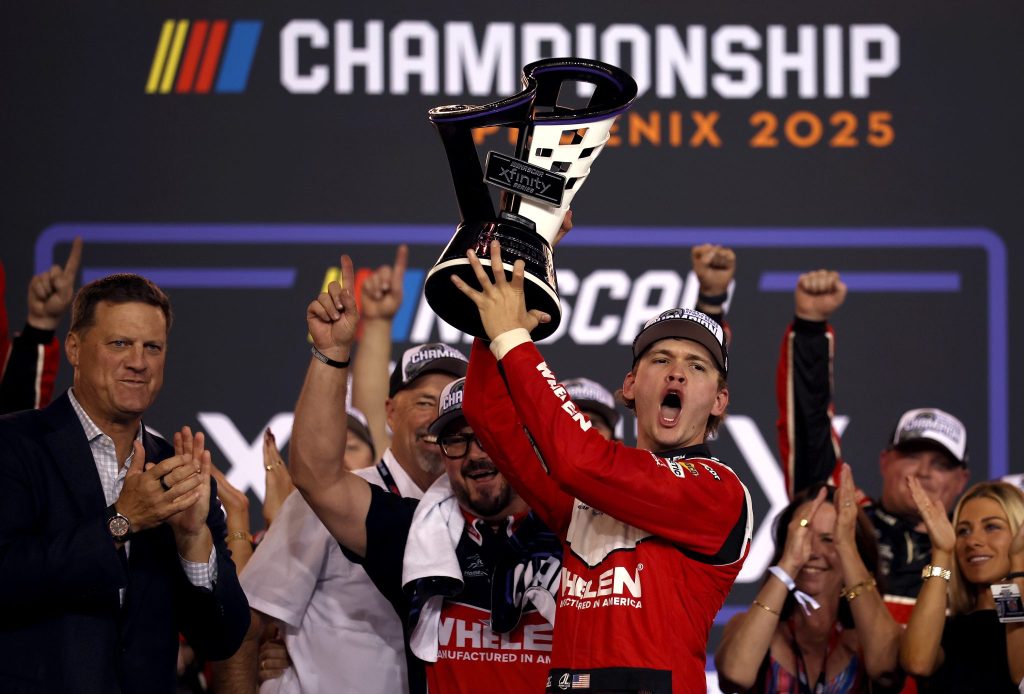
For the race itself, Justin Allgaier led 83 of the 200 laps, which was the most for the field. However, a late-race restart saw Jessie Love and Connor Zilisch battling for the win and championship, while Allgaier was caught in traffic and couldn’t gain enough track position to make a move near the end.
With around 24 laps to go, Love got to the inside of Zilisch and took the lead. With clean air, Love held on for the checkered flag and won his first Xfinity Series title. Aric Almirola also clinched the team title for Joe Gibbs Racing with his second-place finish.
This is where criticism really started to arise across social media. Connor Zilisch was the dominant car of the year. Across the season, he secured 10 wins, 8 poles, and 20 top 5s. Remarkably, 16 of those top 5 finishes were consecutive, an Xfinity Series record. Because of this dominant season, social media felt he was the deserving champion.
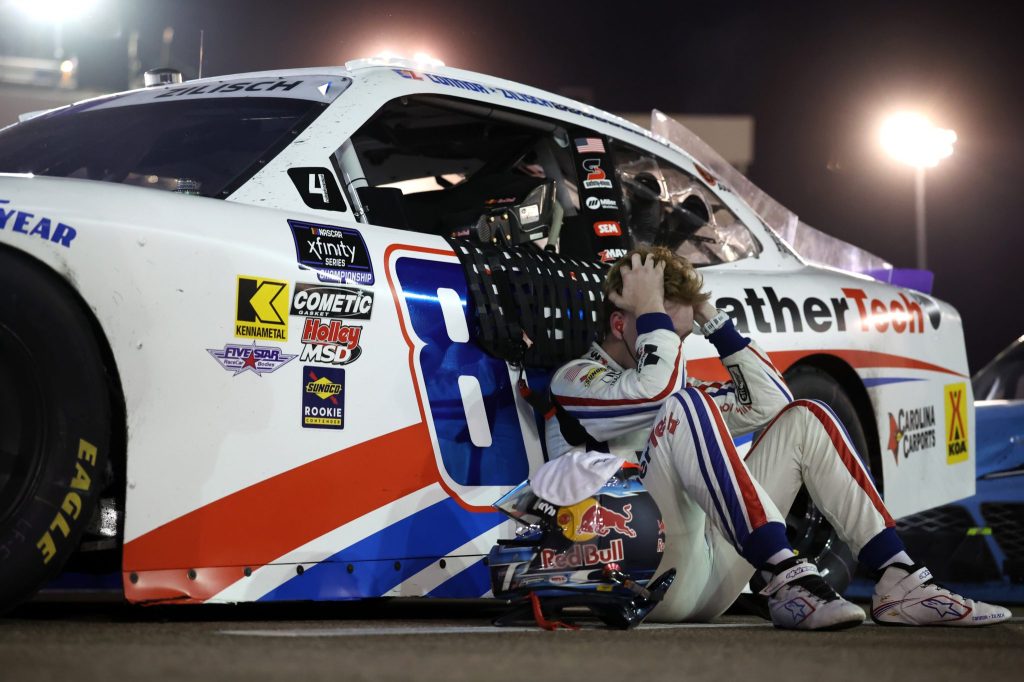
This was not an attempt to take away the accolade from Jessie Love, who had rightfully earned the title under the current format. However, people looked at Love’s 2 wins and 9 top 5 finishes and felt he did not have a comparable season to Zilisch. Social media highlighted this to criticize the current format, which is changing in 2026.
This feeling didn’t just stay on social media; it actually impacted the track’s atmosphere. Jeff Gluck, a motorsports writer for The Athletic, tweeted that the vibe at the track was “strange” and “subdued.” He attributed this to the format changing, though he also mentioned that the format “did not change soon enough.”
NASCAR Cup Series: Heartbreak and More Debate
Let’s be frank: Denny Hamlin absolutely dominated this race. He led 65% of the laps, 208 of 319, while the next closest was William Byron, who led 52 laps.
This race was probably one of the better Phoenix races I’ve seen in recent years. Yes, Hamlin led a significant number of laps, but there was a lot of strategy involving the tires, which would either fall off a cliff or blow out. Goodyear, if you’re reading this, please keep these tires. The blowouts are on the teams, not on you.
The tire issues caused the biggest twist in the race. Denny Hamlin was three laps away from taking home the championship, having built up more than a second of lead. Then, trouble happened. William Byron blew out a tire and hit the wall, immediately bringing out a caution. NASCAR overtime for the championship.
The final pit stops were completed: Kyle Larson took three tires and stormed to the front, while Hamlin took four and was mired in traffic. The rest is history.
Kyle ran away from Hamlin, who could not navigate traffic. Meanwhile, Brad Keselowski looked poised to get the final checkered flag of the season. On the final turn of the last lap, he missed his mark, allowing Ryan Blaney to sneak through and win the race. Keselowski finished second, Larson third, and Kyle Busch surprisingly fifth. Hamlin finished sixth and was the second Championship 4 driver to cross the finish line.
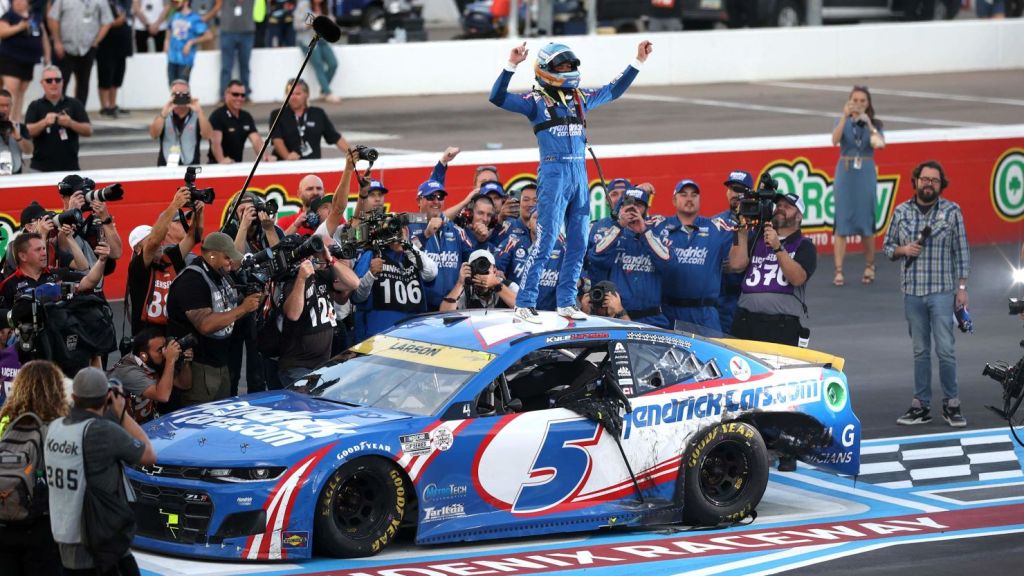
Larson walked away from Phoenix with his second NASCAR Cup Series title, while the championship continues to elude Denny Hamlin. Make no mistake: Larson absolutely deserved this title. However, the only feeling I had post-race was heartbreak and disgust.
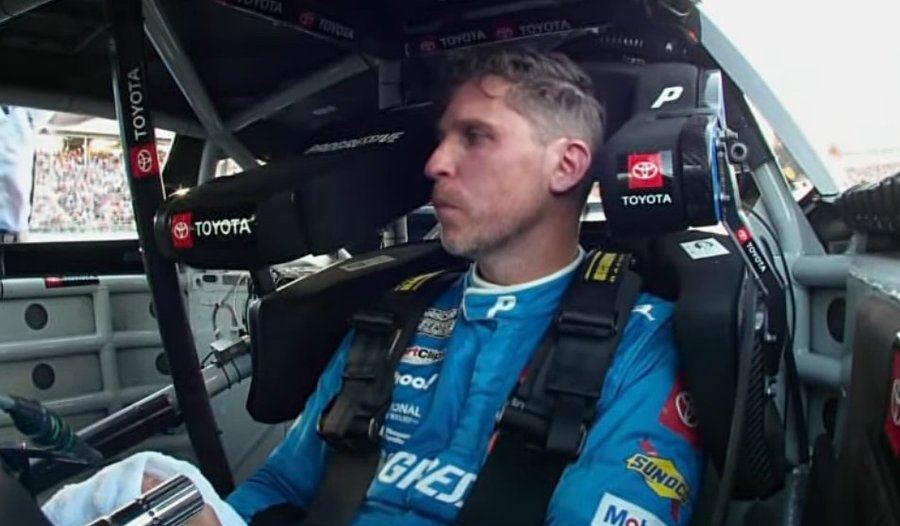
Seeing Hamlin staring off into space while Larson celebrated was one of the most heartbreaking sports moments in my memory (still beaten only by Super Bowl XLIII, as a lifelong Cardinals fan). I felt like Hamlin was absolutely robbed of the championship by a last-minute restart. It took a few hours to regain perspective because every time I looked at anything involving NASCAR, I just felt upset and angry.
Once I could think logically again, I stepped back and evaluated everything. Under a points format, Kyle Larson would have been champion regardless (or Christopher Bell, if NASCAR kept the Winston Cup format). At this point, I could only chuckle. Only NASCAR could take a deserving champion and make it feel like the most undeserving champion since last year.
For reference, Larson led no laps in a format that prioritizes winning over everything. It probably didn’t help that the NASCAR broadcast focused heavily on how important this championship was for Hamlin, who said in a previous interview that it would likely be the last chance for his dad to see him win the title.
Looking back a few days later, I still have a ton of empathy for Hamlin, who has done so much in the sport and for the sport. I really hope he doesn’t pull a Carl Edwards and retire after such a strong year.
Final Thoughts: The Format is Busted and Needs to Change
What are we doing with this playoff format? When it came out, it was supposed to reward drivers who went for the win, as well as generate exciting moments to bring in a new generation of die-hard fans. It really doesn’t feel like it has delivered.
Last year, Joey Logano won the championship. Under a points format, he wasn’t even in the top five for points earners of the season and was almost eliminated in the Round of 12 (until Alex Bowman was disqualified for an underweight car). I don’t remember wondering if Alan Kulwicki, Jeff Gordon, Dale Earnhardt, or Matt Kenseth deserved their titles—but now, it feels like almost every year we are debating whether one or two champions truly deserved the title over another.
Meanwhile, it feels like more and more fans are getting fed up with the format turning its back on the sport. For a system that was supposed to bring in a wave of new fans, it almost feels like it has had the opposite effect.
It’s important to mention that NASCAR has already said they are reworking the format, and rumors suggest the 36-race points format may be back on the table. However, I think NASCAR is too afraid to go all the way back and will likely settle for either a 10-race chase or, worst-case scenario, a 3-3-4-style playoff format.
I am a full proponent of the full-season format and will share my thoughts in detail in a future post during the off-season. But to put it quickly: I think a 36-race format with modified point totals to reward winning over cruising to a finish would be beneficial. It’s easier to follow for fans, eliminates the “deserving champion” conversation, helps make stars, and would increase respect on the track.
 JTL Writes
Leave a comment